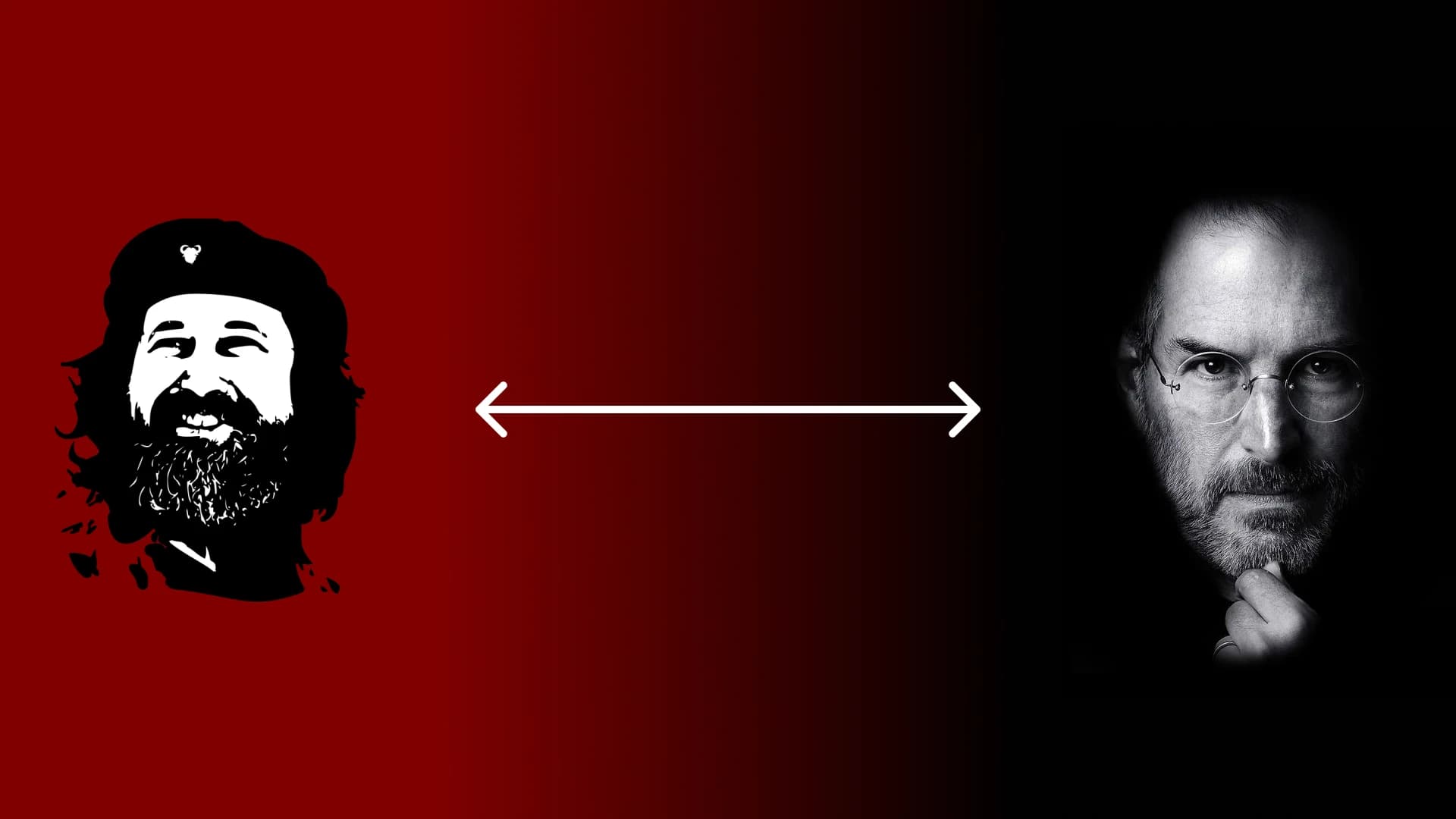
Overthinking Pragmatism in Tech
Balancing idealism and practicality in technology decisions
Tech Philosophy, Pragmatism, Software Development
Human history is not a straight line towards truth, elegance, or correctness. Technology is no different. What we call “progress” is simply imagination repeatedly colliding with constraints. Power limits. Deadlines. Users. Money. Physics. Politics.
Technologies do not win because they are pure, correct, or morally superior. They win because they solve a problem well enough for long enough. Everything else is commentary written by the losers.
Tech feels political. Sometimes theological. That is not accidental. Wherever humans build systems that outlast individuals, belief creeps in. Rules harden. Camps form. Loyalty replaces judgement. Practicality becomes heresy.
This is not a bug. It is the default state of human systems.
The Birth of Ideological Tech
When tools become beliefs
Early tech cultures are pragmatic by necessity. Nothing works. Everything is fragile. Learning is constant. The only metric that matters is survival.
Then a system starts working.
At that moment, ideology is born.
The moment a tool proves itself useful, people stop questioning why it works and start defending that it works. The tool stops being a means and becomes an identity. Criticism becomes betrayal. Alternatives become threats.
This is where tech starts to resemble religion.
- Cross-camp interaction becomes contamination
- Loyalty outweighs outcomes
- Alignment matters more than results
- Failure stops being educational and becomes moral
Learning slows. Dogma accelerates.
The Tech Compass
Pragmatism versus purity
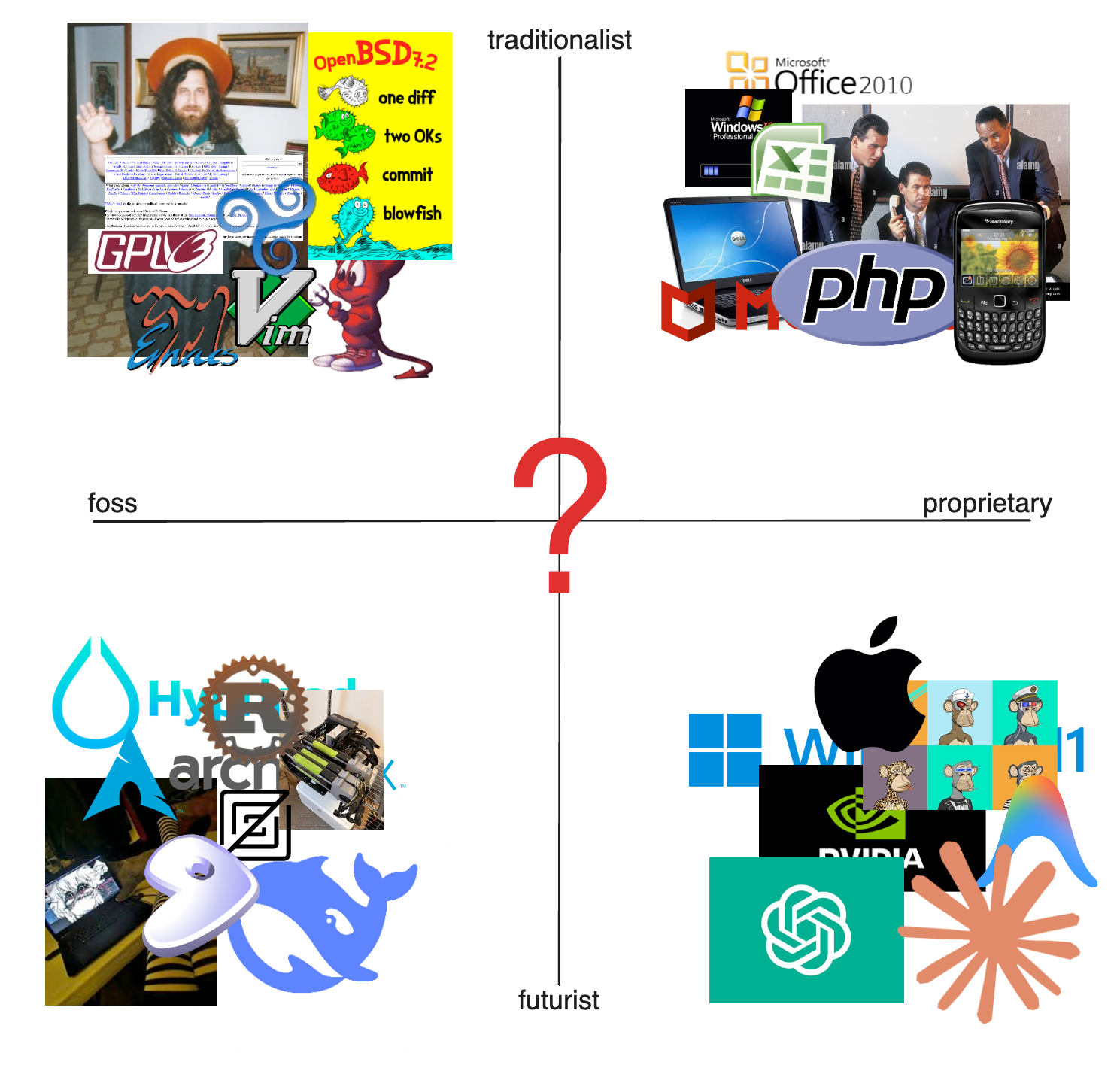
Every technical ecosystem eventually discovers a compass it refuses to admit exists.
On one axis: idealism versus pragmatism.
On the other: outcomes versus alignment.
No one admits where they stand. Everyone claims to be “practical”. Few actually are.
Pragmatism is not centrism. It is not indecision. It is not fence-sitting. It is the uncomfortable act of choosing what survives over what feels correct.
Hardened Beliefs
How systems stop learning
Once ideology sets in, certain beliefs calcify:
- Learning stops because answers are already known
- Alignment becomes more important than outcomes
- “Fail fast” quietly exits the building
- Anything impure loses the right to exist
At this stage, systems do not compete on usefulness anymore. They compete on moral posture. The strongest argument wins, not the strongest solution.
This is how tools die while feeling virtuous about it.
Linux and the Original Sin of Pragmatism
When usefulness beat ideology
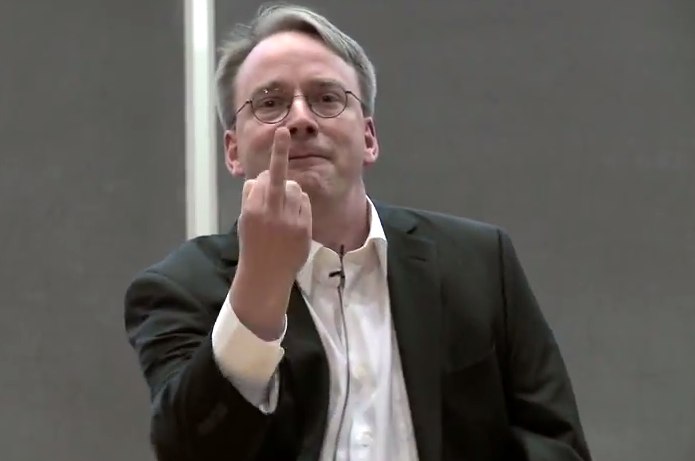
Linux made a choice that many still resent.
It allowed corporations in. It accepted proprietary firmware. (mostly) It tolerated ugly drivers. It chose working systems over ideological cleanliness.
This was not a philosophical victory. It was a survival decision.
The result is not subtle.
- Linux runs servers
- Linux runs Android
- Linux runs infrastructure
- Linux survived
Purity was compromised. Reach exploded.
The war was not won in mailing lists. It was won in data centres.
The GNU Cult
Technically right, strategically irrelevant

GNU represents the opposite extreme.
Foundational. Rigid. Ethically consistent. Ideologically tight.
Its tools are excellent. Its reach is limited.
- Ethics are bound directly to tooling
- Rules are strict and non-negotiable
- Purity is enforced over adoption
- Strategy is sacrificed for correctness
This is not a technical failure. It is a strategic one.
Being right does not matter if no one is listening.
Modern Tech Theology
Arguments without context
Current debates repeat the same pattern with new vocabulary.
- AI should be open or closed
- Cloud versus local
- JavaScript everywhere or nowhere
- Capability is assumed, not discussed
- Context is optional
Positions harden instantly. Nuance is seen as weakness. Trade-offs are ignored. The question “what actually works here?” is replaced with “what camp are you in?”
Belief precedes evidence.
The Pragmatic Approach
Quiet, effective, mildly heretical
Pragmatism does not announce itself. It does not argue on the internet. It does not win moral victories.
It does the following instead:
- Mixes tools shamelessly
- Breaks dogma without apology
- Optimises for real constraints
- Revisits beliefs periodically
- Chooses survival over symbolism
Pragmatism is boring. That is its greatest strength.
Pragmatism in Action
Outcome beats method
A pragmatic system is not neutral or indecisive. It makes hard choices quickly and lives with them honestly.
- Outcome matters more than method
- Trade-offs are acknowledged, not hidden
- Decisions are revisited when constraints change
- Ideology serves systems, not the other way around
There is no claim of moral purity here. Only responsibility.
The Lifecycle of a Tech Ideology
Stages
- Birth: A tool solves a real problem under pressure
- Success: Adoption grows, identity forms
- Hardening: Rules replace reasoning
- Decline: Reality changes, ideology does not
Most ideologies die in stage four. Not because they are wrong, but because they refuse to adapt.
Survival Through Utility
The systems that survive are not the most elegant or ethical. They are the ones that remain useful.
This is uncomfortable. It feels unfair. It is also true.
Conclusion
Technology does not reward righteousness. It rewards adaptability.
The systems that last are not those that shout the loudest about principles, but those that quietly solve problems while everyone else is arguing.
Instead of asking: “Is this the right way to build software?”
Ask: “Does this survive contact with reality?”
Pragmatism is not cowardice. It is respect for constraints.
It is not ideological emptiness. It is disciplined honesty.
It is not compromise for its own sake. It is choosing what works and living with the cost.
Technology does not need belief.
It needs systems that survive.
Everything else is just theology with better keyboards.