Optimism in a vault
The Hopeful Absurdity of Obsidian
Genesis
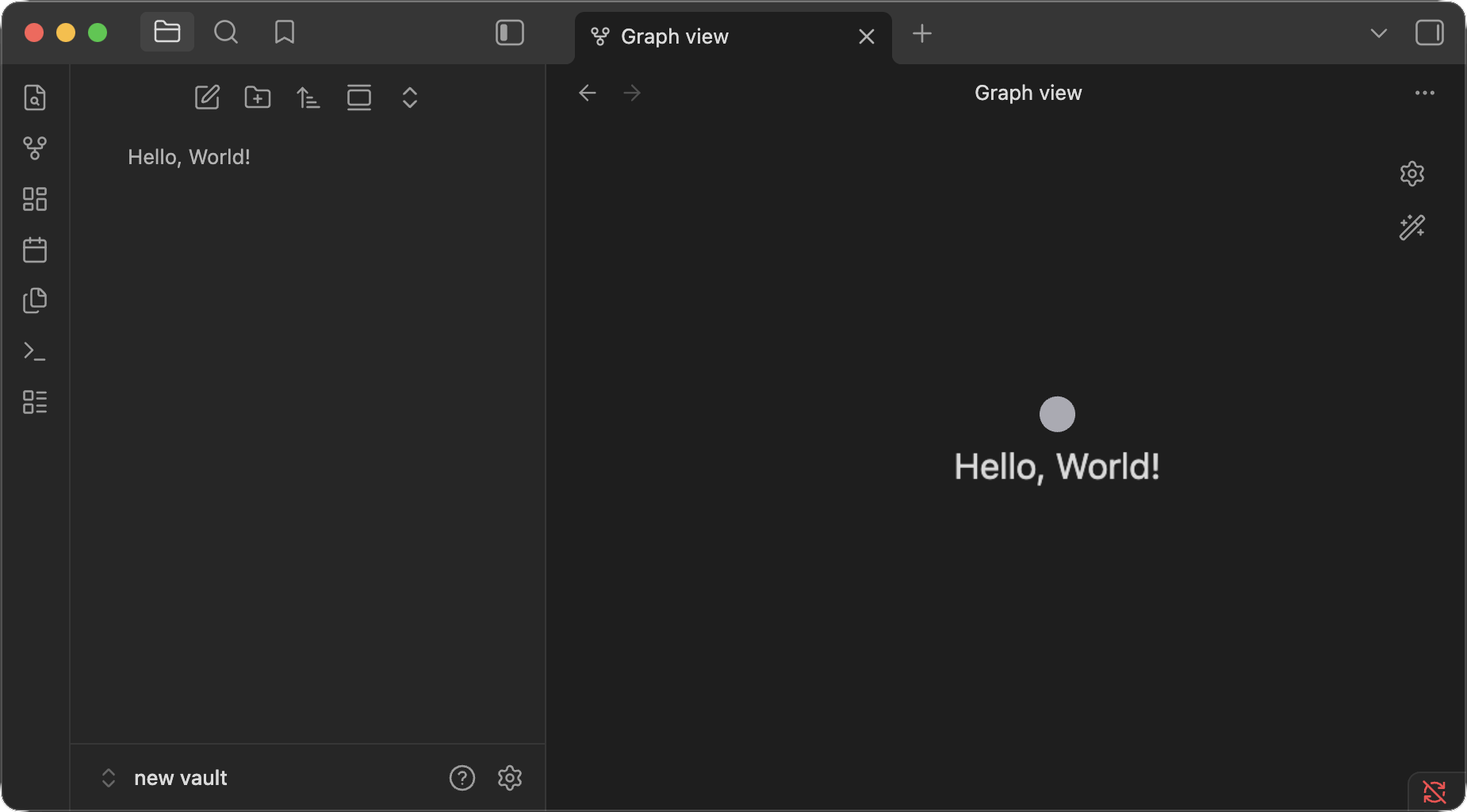
It all starts with a blank, cold, empty, lonely page in a vault with no inhabitants. There is endless possibility, and there is optimism in the void. Every second brain starts with 0 bits in memory and no note to organise. The graph is just empty space. Nowhere to go, nowhere to look. But the art of creation requires little direction. A blank canvas is the easiest place to begin. There is no need to overthink your ideas, and no pressure to worry about misplacing thoughts.
 The new beginning
The spark
All journalling starts with a desire to plan ahead and track the past. The moment I begin taking notes feels peaceful, but that peace quickly turns overwhelming as the days go on. This slow on-off cycle ends only when I return and begin a new train of daily notes.
There is always a spark before the habit. Sometimes it is guilt. Sometimes ambition. Sometimes just boredom on a quiet evening. Something in the mind decides that today deserves to be remembered. A thought feels too valuable to trust to memory alone. Journalling begins with optimism. This quiet belief that future-you will care about what present-you has to say. That these scattered fragments of today will someday become useful evidence. Proof that you existed in this exact state. Proof that your mind once moved like this.
At first it feels small. A sentence. A checklist. A complaint. A strange observation at 2am. Then slowly it becomes ritual. A private conversation with no audience and no need for performance. Just you trying to explain yourself to yourself. That is the spark. Not productivity. Not organisation. Just the deeply human fear that a meaningful thought might disappear forever if it is not written down.
Conversion
The physical book is an unconnected mess. The context for the future and the links to the past are easy to miss. References from the past quickly become a frantic search through pages. Photos need to be printed. Audio and video cannot be saved. Storing documents becomes heavy. Storage itself is prone to bugs, termites included.
All of this can be solved by a digital alternative. Most people divide into two camps. One tribe prays to the Notion gods not to read their deepest, darkest rants. The Obsidian clan prays that sync went through, and that there is no conflict between their phone and their computer. The difference between these two warring nations is a balance between privacy paranoia and the laziness to understand system design. The offline-first, extensible Obsidian life worries less about leaking secrets and more about you messing things up yourself. The polished Notion life is about storing everything in the cloud and hoping it never vanishes, or that the internet survives long enough for you to read an old camping checklist.
I have tried both, and I have chosen to be baptised into the Obsidian cult. This do-it-yourself style of journalling suits me best. The plugin market is abundant, and the bash + markdown combination is unbeatable when I decide to reshape old notes because I have grown bored with how they look. The Obsidian ecosystem works well with both Git and Syncthing.
Beautiful overcomplexity
Because of this life decision, there is a reason to set up a system to sync the files. The system varies for each person. Some build a simple pipeline with one sender and one receiver. The Abrahamic server. One supreme source of truth. One machine writes, another machine obeys. Others choose chaos. Every device sends, every device receives, and all of them negotiate silently in the background, hoping no two edits collide at the same time. The pagan pantheon. Where the conflict of devices is not a problem but an inherent feature.
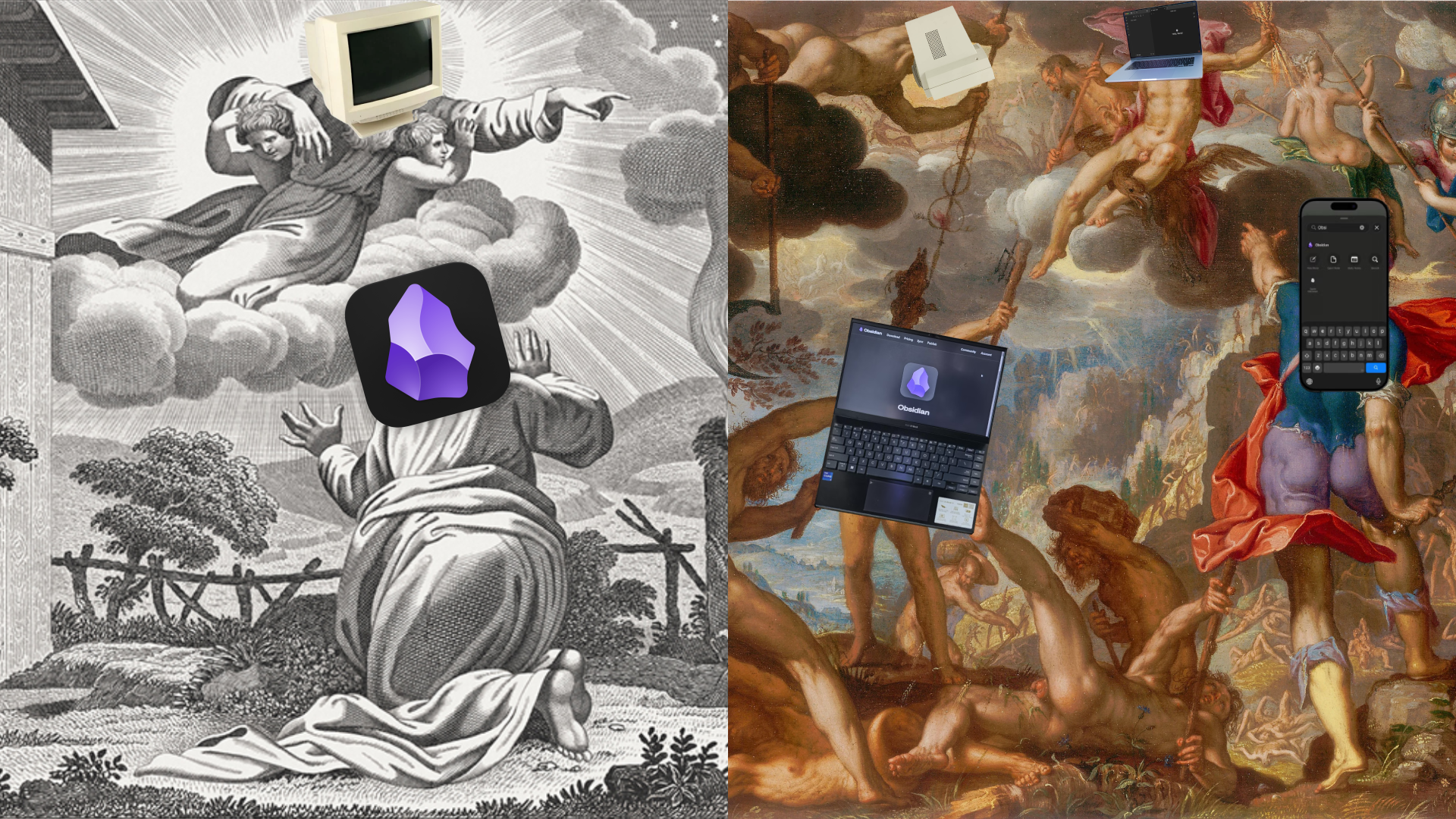 Josef Battmann, God appears to Moses, 1830 and Joachim Wtewael, The Battle Between the Gods and the Titans, 1600
Some surrender to the cloud completely. They let distant servers of GitHub and GitLab solve problems they do not wish to think about. Others refuse this arrangement entirely and build local-first fortresses of redundancy. Multiple backups. External drives. Git histories stretching back months. A Syncthing mesh spanning laptops, phones, and forgotten tablets. A few steps shy of setting up a TrueNAS server with multiple disks in a web of network cables and hundreds of daemons inside.
This is where journalling quietly stops being about writing and starts becoming systems design. You begin with a note-taking app and somehow end up reading about distributed systems at midnight. Conflict resolution becomes personal philosophy. Backup strategy becomes a personality trait.
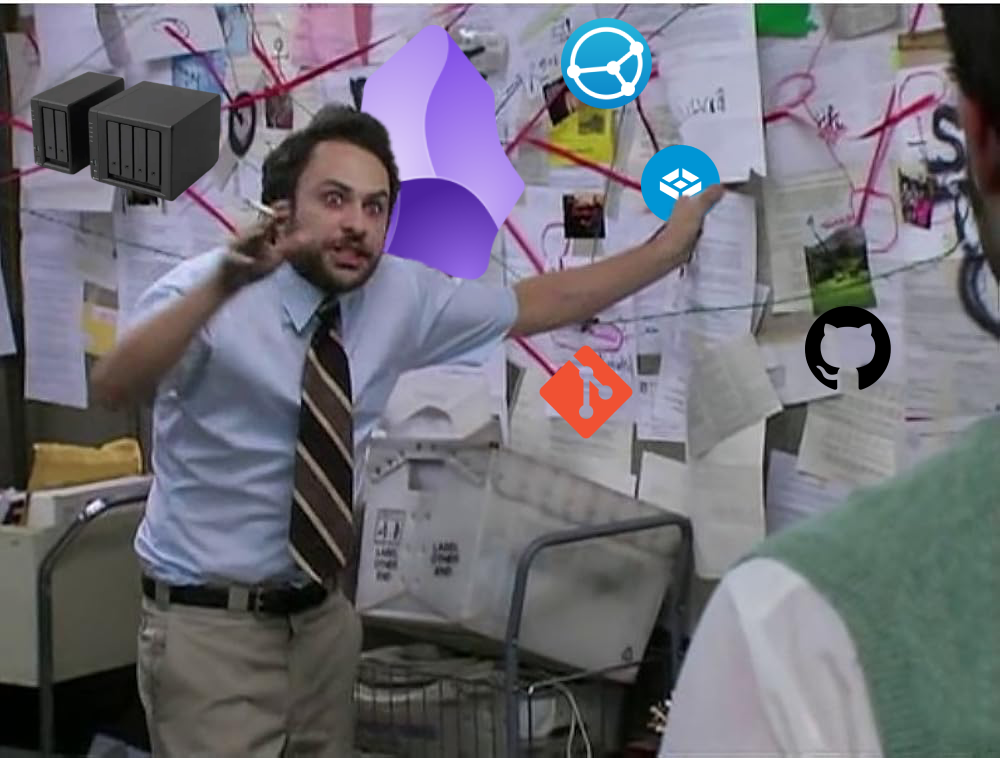
And strangely, this overcomplexity is what the members of this nation yearn for. The notes are yours, but so is the machine built to protect them. The vault becomes more than a folder. It becomes infrastructure. Slightly absurd, mildly fragile, deeply satisfying.
But infrastructure is never enough. The machine must also look right. CSS themes are added. The window layout is designed to be the most optimal layout with a calendar on one side and the graph on the other.
My System
My own system lives somewhere between recklessness and paranoia. Syncthing runs on a phone, a laptop, and a tablet. All three have read and write permissions. No master. No slave. Pure democracy. Every device believes it has equal authority, and somehow peace is maintained.
The vault is just:
- Daily notes for surviving the present.
- Notes for pretending thoughts are permanent.
- Yappery for everything too unstructured to deserve a better name.
- Academic stuff for deadlines and guilt.
- Web clippings for links I swear I will revisit.
- Templates for the illusion of consistency.
The interface is designed as:
- The file tree stays on the left, usually collapsed, like a cupboard I only open when absolutely necessary.
- The calendar and graph sit on the right, quietly judging my consistency and reminding me of all the days I forgot to write.
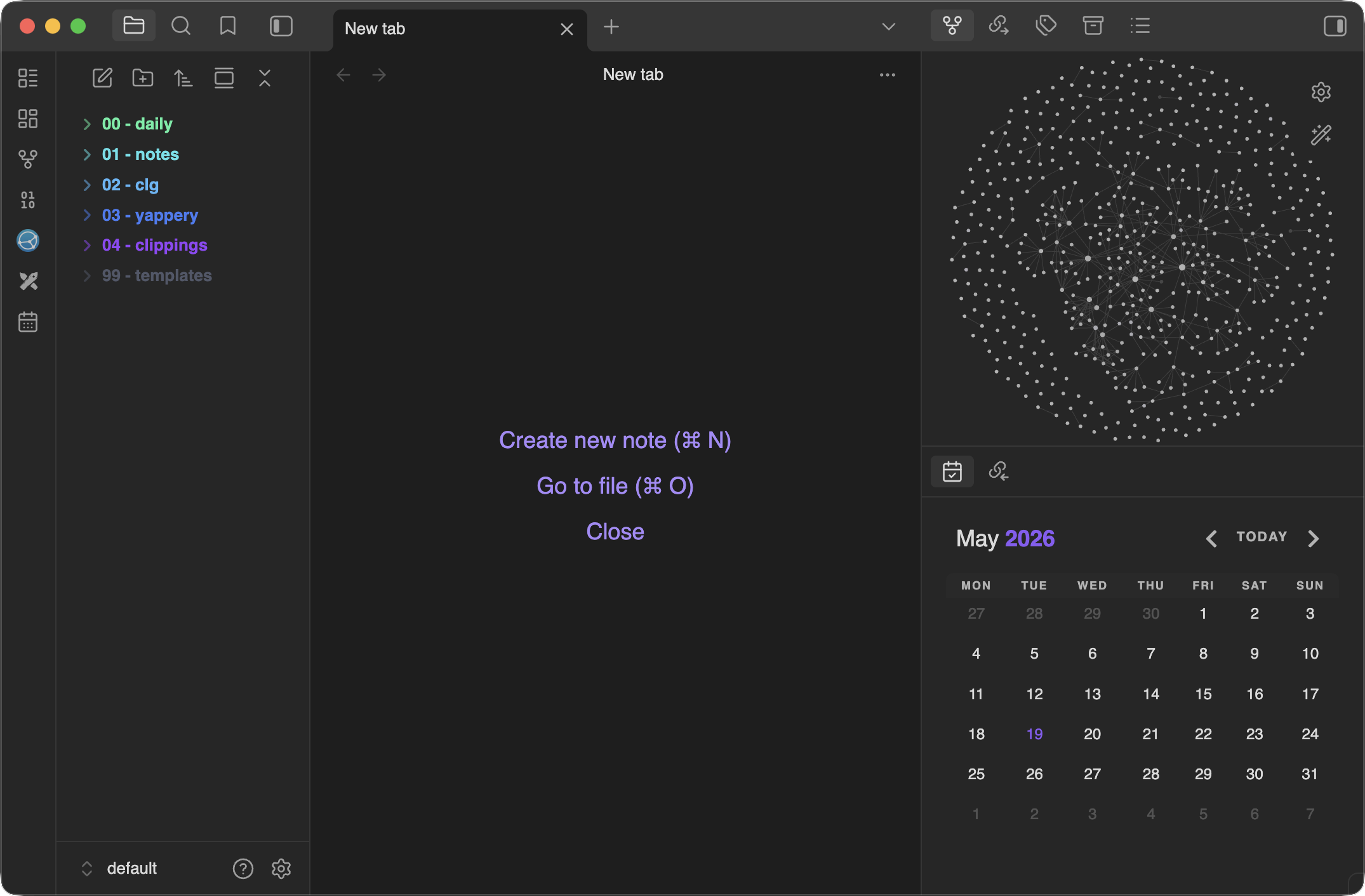 My Obsidian Setup
The plugin list is deliberately short. Calendar, because time exists. Syncthing integration, because the rarest of the conflicts need to be handled. Excalidraw, because sometimes thought refuses to become text and demands to be drawn instead.
This is not an elegant system. It is not even particularly clever. But it works. And in personal infrastructure, that is as close to perfection as one can reasonably expect.
The trap and its escape
After fixing the pipeline the real issue of journalling begins. How should you write things down? This is not a question of your language but of structure. How should you organise your files and how should you write things in those files? Templates are sought for. And evenings are spent watching guides for the most optimal setup. Plugins are installed and the build is now heavier.
Soon the fiddling begins. Little time is spent on writing the note and the structure is focused. Journalling now feels like a chore and you're Sisyphus, customising your setup every day just to change it more than you create new notes.
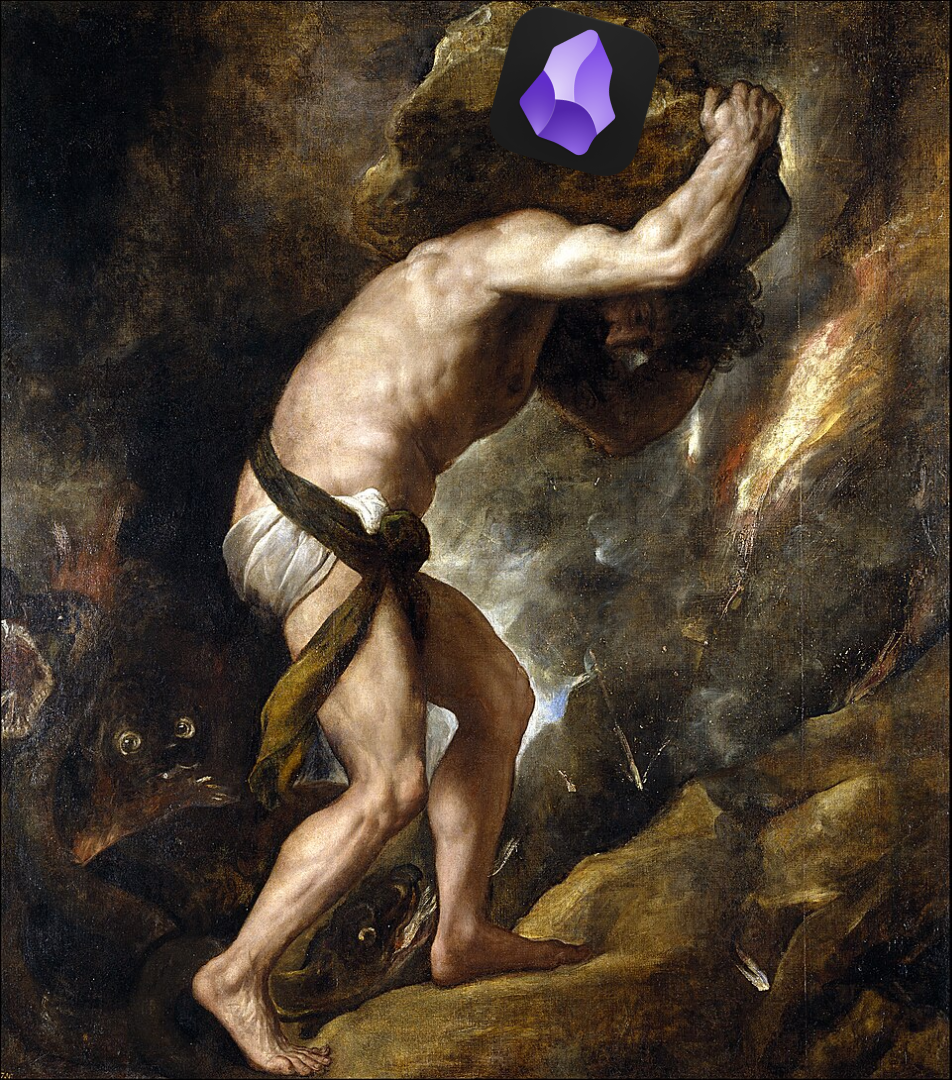 Titian, Sisyphus, 1548–1549
The optimisation spiral is subtle because it feels productive. You tell yourself that a better system will create better thoughts. That cleaner folders will create cleaner writing. That one more plugin, one better template, one slightly improved workflow will finally unlock consistency. But the perfect note is a trap. It asks for polish before thought. It demands formatting before honesty.
Soon the note is no longer the point. The note-taking becomes the hobby. The journalling app becomes a construction site that never opens to the public. Walls are painted. Furniture is moved. The foundations are rebuilt. But nobody lives in the house. Missing one day feels harmless. Missing a week feels normal. The vault that once felt alive slowly turns into a museum. Half-finished daily notes. Empty templates waiting to be filled. Folder structures that made perfect sense three months ago and now look like archaeological ruins.
Carefully engineered, beautifully themed, completely unused.
The escape is embarrassingly simple. Notes are means, not ends. They exist to serve thought, not to replace it. The vault is supposed to support your life, not become your life. Life must happen before documentation. Something worth writing has to happen before something can be written. Thought comes before system. Always. The system can only organise what already exists. It cannot create meaning by itself. A bad note written today is infinitely more valuable than the perfect template prepared for tomorrow. At some point you stop trying to build the ideal machine for thinking. You accept the messy note. The unfinished sentence. The badly linked page. And strangely, that is when the journalling starts working again.
A note on optimism
Optimism is the real reason journalling survives. Every new note is a quiet act of belief in tomorrow. It assumes there will be a future version of you who will return, read, reflect, and continue the thread. It is a small promise made repeatedly to a person you have not yet become.
There is faith hidden in maintenance. Updating links. Renaming folders. Fixing broken embeds. None of it is urgent, yet all of it assumes the vault is worth preserving. You do not maintain things you plan to abandon. Maintenance is belief made visible. A note written in confusion today can become clarity years later. A sentence typed in frustration can become evidence of growth. The graph slowly expands, not as proof of productivity, but as proof of persistence.
A growing archive of ordinary days. A collection of unfinished thoughts trusted to survive longer than memory. A quiet machine that keeps accepting your notes without judgement, always ready for the next one.
But at some point this stops being about software at all.
A philosophy of maintenance
The folders, the plugins, the sync pipeline, the graph. These are only the visible parts of something much older. This is philosophy disguised as infrastructure.
The Stoics would have understood this instinct. Marcus Aurelius wrote daily reflections not because the page itself mattered, but because the practice mattered. He did not write Meditations for publication. He wrote to reorder his own mind. To remind himself how to live. A daily note is not very different. It is less literature and more ritual. Less archive and more exercise. Open the vault. Write the note. Close the vault. Repeat. Over time this stops being productivity and becomes a habit of attention, a way of noticing your own life closely enough to preserve it.
Camus wrote about the absurd condition of building meaning in a world that guarantees none. Journalling feels strangely similar. You write notes knowing many will never be read again. You maintain links knowing some will break. You organise thoughts knowing memory itself will eventually fail. You create backups knowing that even your hardware will decay. And yet you do it anyway.
That persistence is not efficiency. It is defiance. Every new note is a small rebellion against forgetting. Every repaired link is a refusal to let the past disappear. Every daily note is a wager that tomorrow deserves preparation. This is maintenance not as labour, but as hope.
Even the system design itself carries a philosophy. Backups are an admission of fragility. Tags are an admission that thought resists hierarchy. Folders are an attempt to impose order on experience. Graph view is an aesthetic claim that relationships matter more than categories. Every design decision quietly answers a philosophical question: what deserves to be remembered, and how?
The vault is not just a tool for memory. It is an argument about how to live. That your thoughts are worth preserving. That your days are worth recording. That your future self is worth helping. That ordinary life deserves archival dignity.
And perhaps that is the final purpose of all this beautiful overcomplexity. Not better notes. Not cleaner systems. Just a quieter way of saying: I expect to be here tomorrow.